When Staying Put Stops Being Safe
There's a phrase going around right now: job hugging. It means holding onto a job because you're scared to let go. You stay put. Keep your head down. Stop asking for more. You hug the job like it's the last lifeboat off the ship.
Most of what's written about it misses the point. It gets treated like a numbers problem — nobody's switching jobs, the charts are flat, bad for the economy. Nobody says what it feels like to be the person doing the hugging.
You know what it feels like. A lot of you have lived it.
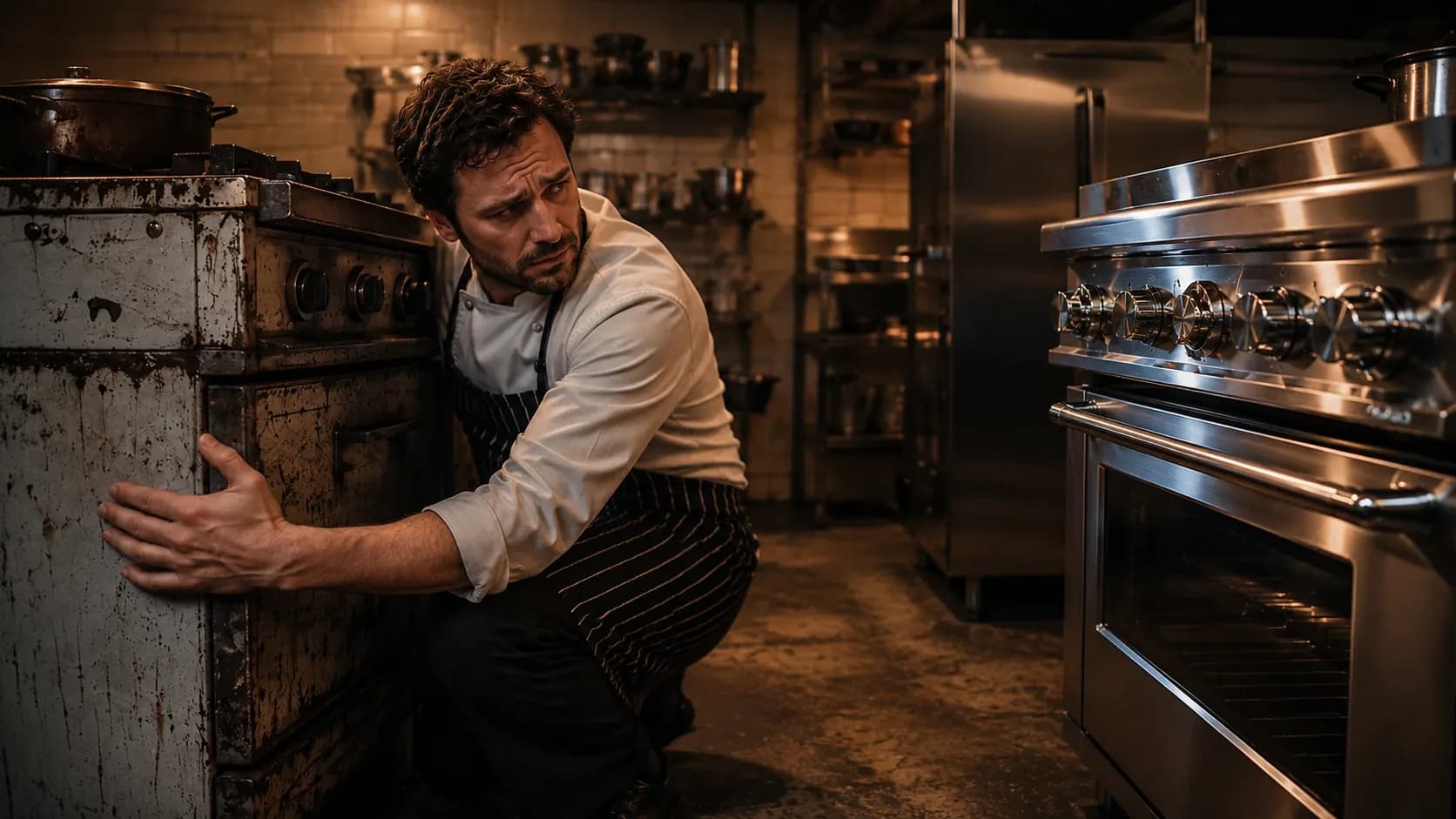
It feels like being grateful and stuck at the same time. Somebody gave you a real shot — maybe your first real one in a long time. Now you've got a paycheck, a schedule, and a chef who trusts you. The last thing you want is to mess it up. So, you don't ask. Not to run the line, not to learn ordering or costing, or how the books work. And when a better spot opens up across town — more money, more room, a real shot at sous — you don't even let yourself look. You tell yourself you're set. You're loyal. You're fine right here. You just show up, work clean, and keep quiet. Because reaching for more feels like pushing your luck, and you've watched luck go the wrong way enough times to know how fast it turns.
Here's what I want to say plainly: staying still to stay safe is not the same as being safe.
The Slow Decline of Standing Still
Here's how it goes. The person who hugs the job stops growing. Not all at once — slow. Like a plant in a pot that's too small. Still alive, still working, but the roots have nowhere to go. Then something changes that they didn't control. The restaurant closes. The chef leaves. The owner "restructures." And they're standing there with the same skills they had three years ago, holding a lifeboat that just sprung a leak.
The fear was real. It just protected the wrong thing.
Sometimes the trap is not speaking up. But sometimes it's worse than that — there's nowhere to go even if you do. The kitchen's full. The sous isn't leaving. The chef's not retiring. You can ask all day, and the answer's still no — not because you're not good, but because there's no room. That's the sneakiest kind of stuck, because it feels so comfortable. You know the menu. You know the crew. You know exactly how the night's going to go. And comfortable is exactly where people stop becoming anything.
If that's you, the brave move isn't asking for a promotion that doesn't exist. It's looking up and out. Putting your name in somewhere new. Walking into a place that scares you a little because it would actually stretch you. That's not disloyal. That's not ungrateful. That's refusing to spend the best years of your hands in a pot that can't hold you.
Smart Fear vs. Paralyzed Fear
Now — I'm not telling you to do something reckless. You've got rent. You've got people counting on you. I spent about thirty years in leadership before this work, sitting with people in hard spots, and I never once told somebody in a tight place to "follow your passion" off a cliff. That's not advice. That's a bumper sticker.
What I'm saying is smaller and harder. Don't let fear make the call without telling you it's making it.
Job-hugging is sneaky. It doesn't feel like a choice. It feels like being responsible. It feels like gratitude. It looks exactly like a good employee — reliable, humble, never any trouble. But underneath, sometimes, it's just fear with good manners.
The Questions That Matter
So, here's all I'm asking. Not quit tomorrow. Not gamble. One honest question.
Am I staying because this is the right kitchen for me right now — or because I'm scared of what's out there, and comfortable enough to not look? Those are different answers. You know which one is true. You always do.
Then one more: what's the next move I'm not making because I'm scared? Maybe it's small — asking the chef to teach you a station, signing up for the ServSafe manager class, saying "let me try the ordering this week." Or maybe it's big — sending your name to a place across town that has the room this one doesn't. Either way, it's the thing you keep telling yourself you'll do when things settle down — knowing full well things in a kitchen never settle down.
You're Built for More Than This
You learned in here that you can do hard things. That's the whole point of EDWINS. You scrubbed in, you took the heat, you finished. You didn't come through that program to spend the rest of your life holding your breath, hoping nobody notices you.
You came out to become something. And becoming doesn't happen standing still.
The lifeboat was never the goal. Dry land was.
The water looks rough from where you're standing. It always does. But you've already swum through worse than this, and you're still here. That counts for a lot.
Don't hug the job. Use it — and when it's got nothing left to teach you, have the nerve to let go and swim. There's a difference between the two, and your future self is begging you to learn it.