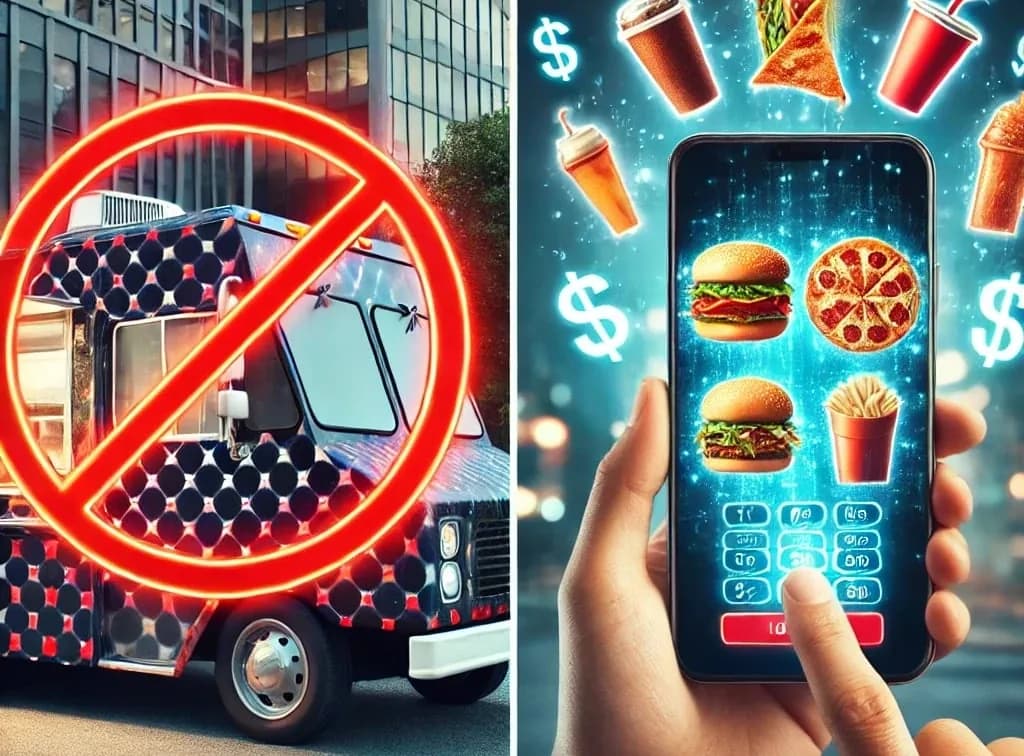
The idea of owning a food truck is exciting, but the costs are overwhelming. Buying a truck, getting permits, and outfitting it with equipment can easily exceed $100,000 before you even sell your first meal.
Instead of taking on massive debt, you can start a profitable food business for $10,000 or less using a ghost kitchen and food delivery apps like Uber Eats, DoorDash, and Grubhub.
This strategy lets you:
- Start small with lower costs
- Avoid financial risk and debt
- Get customers immediately through food delivery apps
- Make money in weeks, not months or years
Let's break down the real costs and how to launch a food business on a budget.
What Does It Cost to Start a Food Delivery Business?
A traditional food truck or restaurant can cost $75,000—$200,000+, but by leveraging ghost kitchens and food delivery apps, you can start for $10,000 or less.
Startup Costs Breakdown
| Expense | Estimated Cost |
|---|
| Ghost Kitchen Rental (First Month) | $500—$1,500 |
| Food & Packaging Inventory | $2,000 |
| Business License & Permits | $500—$1,000 |
| Marketing & Branding (Logo, Photos, Website, Flyers) | $500 |
| App Setup Costs (Uber Eats, DoorDash, Grubhub) | $0—$350 |
| Delivery App Fees (First Month's Orders) | $1,500—$3,000 |
| Miscellaneous Costs (Insurance, Small Equipment, Utensils) | $500 |
| TOTAL STARTUP COSTS | $5,500—$9,500 |
A Step-by-Step Guide to Launching Your Food Delivery
Step 1: Secure Startup Funding (Without Going Into Debt)
Even if you don't have $10,000 saved, there are grants and 0% interest loans available to help you get started.
Grants (Free Money, No Repayment)
These grants help cover startup costs without requiring repayment:
Cuyahoga County Small Business Stimulus Grant — Up to $50,000 for new businesses. cuyahoga county.govDefy Ventures — Provides training and funding for formerly incarcerated entrepreneurs. defy ventures.orgUrban League of Greater Cleveland — Small business grants and mentoring. ul cleveland.orgThe Reinberger Foundation — Supports entrepreneurs seeking economic self-sufficiency. reinberger foundation.org0% Interest Loan Options (If You Need Extra Cash)
If grants don't fully cover your startup costs, these loan programs offer 0% interest:
HULA of Northeast Ohio — Interest-free loans up to $20,000. interest free.org (216) 378-9042Ohio Micro-Loan Program— $10K—$45K for small businesses. development.ohio.govIf you secure just $5,000 from grants or loans, you'll have enough to launch while keeping personal costs low.
Step 2: Rent a Ghost Kitchen & Reduce Overhead
Instead of a food truck or full restaurant, you rent a shared-use commercial kitchen as needed.
Prep Kitchen CLE (Downtown Cleveland) — Hourly or monthly rental. prep kitchen cle.comCleveland Central Kitchen— Flexible rental for small businesses. the central.kitchenGarfield Culinary— Fully equipped kitchen for food startups. Garfield culinary.comCost: $500—$1,500 per month, far cheaper than a food truck or restaurant lease.
Step 3: Get Set Up on Food Delivery Apps
Business license & food permits—$500—$1,000 Food inventory & packaging—$2,000 Register on Uber Eats, DoorDash, & Grubhub—$0—$350 setup fee Market on Instagram, TikTok & local Facebook groups — FREE
Step 4: Understand & Manage Delivery App Fees
Delivery apps take a cut of every sale, which can impact your profit if you don't plan for it.
What Do Uber Eats, DoorDash, & Grubhub Charge?
Platform Commission Fees Additional Fees Uber Eats 15%—30% per order $350 activation fee (waived for some) DoorDash 15%—30% per order $0—$30 monthly marketing fees Grubhub 10%—30% per order $0—$50 monthly service fees
Example: If you sell $10,000 per month on delivery apps, expect to pay $2,000—$3,000 in fees.
How to Reduce Fees & Keep More Profit
- Encourage direct orders— Use WhatsApp, Instagram, or a basic website.
- Offer discounts for direct orders— Since you save 15%-30% in fees, pass savings to customers.
- Start with one platform (Uber Eats or DoorDash) and expand later.
Step 5: Build Sales & Become Profitable in 3-6 Months
Month 1: Get Your First Sales Without Stress
Secure $2,500—$3,000 in pre-orders from family, friends & social media.
Offer meal plans & bulk discounts to lock in early sales.
Partner with local gyms, barbershops, and co-working spaces for weekly meal deals.
Month 2: Grow to $5,000+ in Sales
Use Uber Eats & DoorDash promos to attract more customers.
Offer discounts for direct orders to avoid app fees.
Begin testing pop-ups & catering orders for extra income.
Month 3-6: Scale & Achieve Full Profitability
Increase kitchen hours as demand grows.
Get featured on Uber Eats & DoorDash to expand reach.
Hire a part-time worker only once profits allow.
Goal: By Month 4-6, reach $10,000+ per month in revenue—fully covering costs and turning a profit.
Final Thoughts: Start Smart, Build Strong
Big dreams don't require big debt. Starting a food business with $10,000 or less isn't just possible—it's the smartest way forward. By using ghost kitchens and delivery apps, you cut the risk, lower the cost, and get to profit faster than with a food truck or restaurant.
This approach isn't just a workaround—it's a proven path. Many thriving food businesses started exactly this way before expanding to trucks, catering, or brick-and-mortar locations. You can too.
Ready to Take the First Step?
Your food business is possible. Let's make it happen!
For more insights in the culinary industry and leadership, subscribe to Food for Thought for Leadership at: Injury