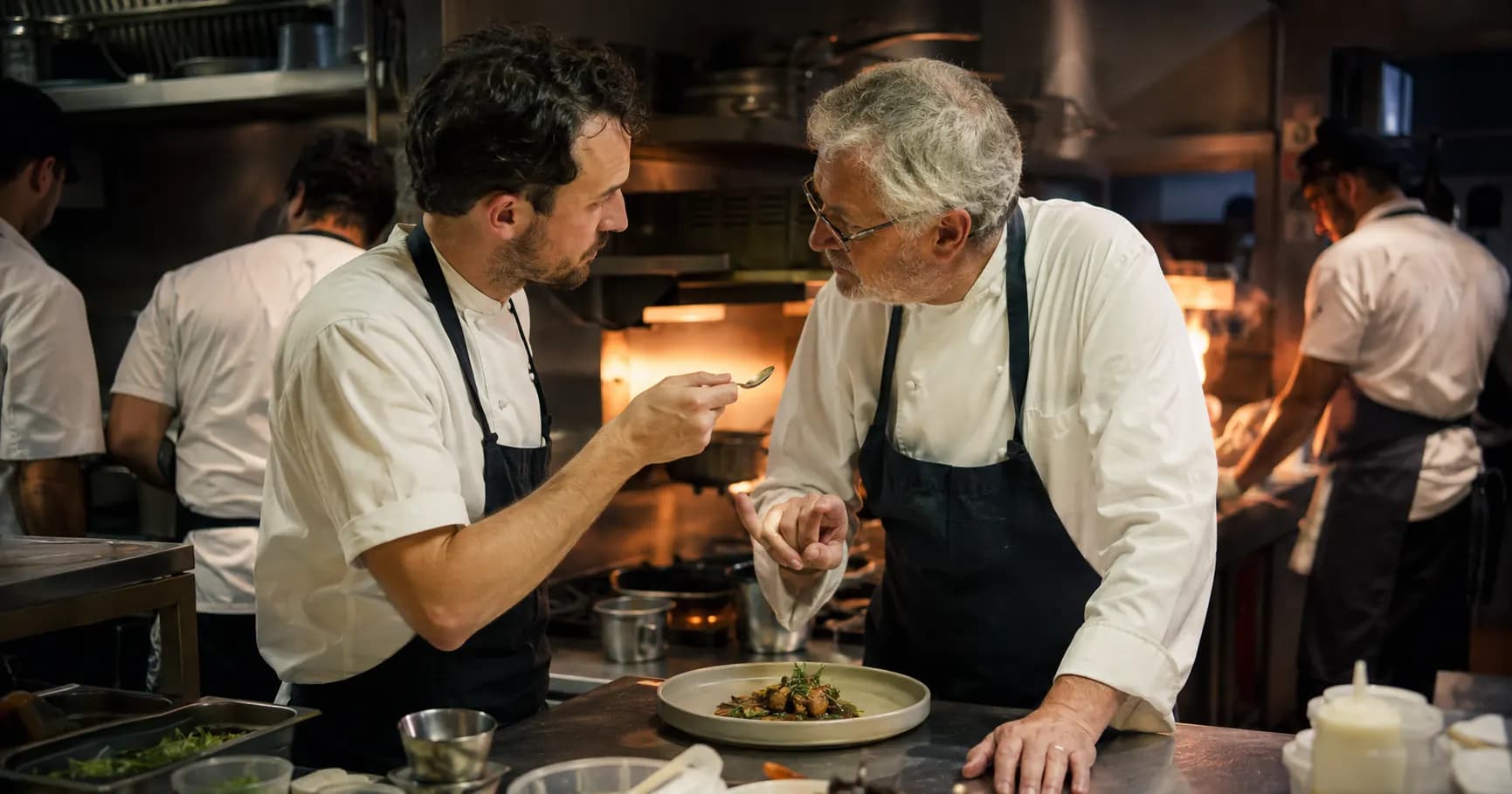
Every great kitchen faces heat, chaos, and high stakes. But what separates good chefs and team leaders from great ones isn't just skill—it's resilience. In the culinary world, resilience is more than "bouncing back." It's the ability to stay grounded in the middle of the rush, to keep thinking clearly when emotions run high, and to lead others through pressure with calm focus.
That's the foundation of emotional intelligence (EQ)—and EQ is what drives every other leadership skill.
Why Resilience Unlocks Emotional Intelligence
Emotional intelligence starts with awareness: recognizing what you feel, why you feel it, and how those emotions affect your tone, your timing, and your team. But awareness without resilience won't hold up under stress.
In a busy kitchen, it's easy to slip into reactivity—snapping at a teammate, shutting down when something goes wrong, or trying to do everything yourself. Resilience creates the space to pause, breathe, and choose your response instead of reacting on instinct. That pause is where EQ lives.
When you're resilient, you move from "heat of the moment" emotion to clear, intentional action. You lead with influence instead of intensity.
The Brain Behind the Burn
Under stress, the brain shifts control to its oldest part—the brain stem, which runs our instinctive "safety scan." It constantly looks for danger and triggers one of the four F's:
- Fight: snapping or blaming
- Flight: shutting down or walking away
- Freeze: freezing up or forgetting the next step
- Fawn: trying to please everyone to avoid conflict
Those reactions might keep you safe in a crisis, but they don't help you lead a kitchen or build trust with your crew.
Resilience helps quiet that safety alarm. It signals to the body, "I'm okay. I can handle this." That moves thinking forward—literally—to the frontal cortex, the part of the brain that handles problem-solving, communication, empathy, and decision-making.
In other words, resilience gives you back your ability to think like a leader instead of react like a survivor.
Emotional Intelligence Drives Culinary Leadership—and Career Success
Research across industries shows that emotional intelligence is the strongest predictor of success:
- 90% of top performers have high EQ.
- On average, those with higher EQ earn $29,000 more per year.
- Each point increase on an EQ scale is linked to about $1,300 in additional annual income. (Source: Talent Smart, Harvard Business Review)
In the kitchen, EQ shows up as:
- Self-awareness when tension builds during a dinner rush.
- Self-management when feedback feels personal.
- Empathy when a teammate is struggling.
- Relationship management when the team needs motivation, not fear.
It's no coincidence that the chefs who rise the fastest—and lead the healthiest, most loyal teams—are those who can stay steady under stress and emotionally tuned to the people around them.
How to Build Resilience (and EQ) in the Kitchen
- Pause Before You React When stress hits, the limbic system puts your body and mind on alert—faster heart beat, shallow breathing, tense muscles, and reactive thinking. But it works both ways: when you slow your breathing and release tension, you send a message back that you're safe. That signal calms the system and allows the frontal cortex—your center for clear, proactive thinking—to take over. A simple technique is coherent breathing: inhale slowly for a count of six, then exhale for a count of six. Even a few of these steady breaths can reset your brain and help you lead with calm in the heat of service.
- Name It to Tame It When you can identify and label what you're feeling—"I'm frustrated," "I'm anxious," "I'm disappointed"—you immediately calm the emotional storm. Simply naming an emotion moves your thinking from the brain stem (reactive) to the frontal cortex (proactive). That shift helps you respond with intention rather than instinct, restoring clarity and control even in the middle of the rush.
- Reframe the Moment Instead of "Everything's falling apart," try, "This is tough, but we've handled worse." Reframing shifts your focus from the problem to the possibility. When things go wrong, it's easy to get trapped in what isn't working. Resilient leaders imagine what they want to create instead—the kind of teamwork, communication, or outcome that would make things run smoothly. Focusing on that desired picture activates higher-level thinking in the frontal cortex, helping you move from reacting to designing a better result. It's the moment where leadership replaces frustration.
- Recover, Don't Just Endure Rest and recharge between shifts. Resilience grows during recovery, not constant motion. It helps to build daily resilience routines that desensitize your brain stem and limbic systems so you stay calmer and more focused when things get tough. Breathing exercises, walks in the woods, meditation, listening to music, or physical exercise all signal safety to the body and train your system to recover faster from stress. The stronger your recovery habits, the steadier you'll be when the pressure returns.
- Practice Micro-Reflection After a stressful service, ask: "What worked? What didn't? How did I handle pressure?" The pattern of reflection builds emotional intelligence over time.
The Payoff: Leading with Calm in the Chaos
When you develop resilience, you control the tone of the kitchen instead of letting the kitchen control you. You shift from command to connection, from intensity to influence. Emotional intelligence doesn't just make you a better teammate—it makes you a stronger leader, a more trusted chef, and a calmer presence under pressure. In the end, resilience is the secret ingredient that transforms emotional intelligence into action—and turns good cooks into great leaders.