It is late on a Thursday afternoon. A man on location monitoring has just started a new job at a warehouse, and his GPS monitor keeps losing its signal whenever he is inside the building. Every drop sets off an alert that looks like a possible violation. The officer does everything right. She checks each alert, calls the monitoring vendor, and confirms with the employer that he is at work. It still takes her two days to find a fix.
For the man on release, those two days cost far more. Each time the signal dropped, he had to stop working and step outside so the monitor could reconnect. His supervisor at the warehouse noticed. On the third day, the employer let him go. He lost the job because of a device that didn't work, not because of anything he did. He had done everything asked of him, and that steady job was helping him succeed on release. Keeping it was also one of his release conditions.
The officer's work suffered too. For two days, one case took most of her attention. Home visits on the rest of her caseload were pushed back, reports and paperwork piled up, and she spent the following week working late to catch up.
Two hours away, a colleague in another office had already solved this exact problem. Last month that colleague worked out a fix with the vendor that stopped the false alerts in a single afternoon. One phone call on the first day would have ended the problem before the employer ever lost patience.
That call never happened. The two officers have met only once, at a training years ago, and neither knew the other had anything to share.
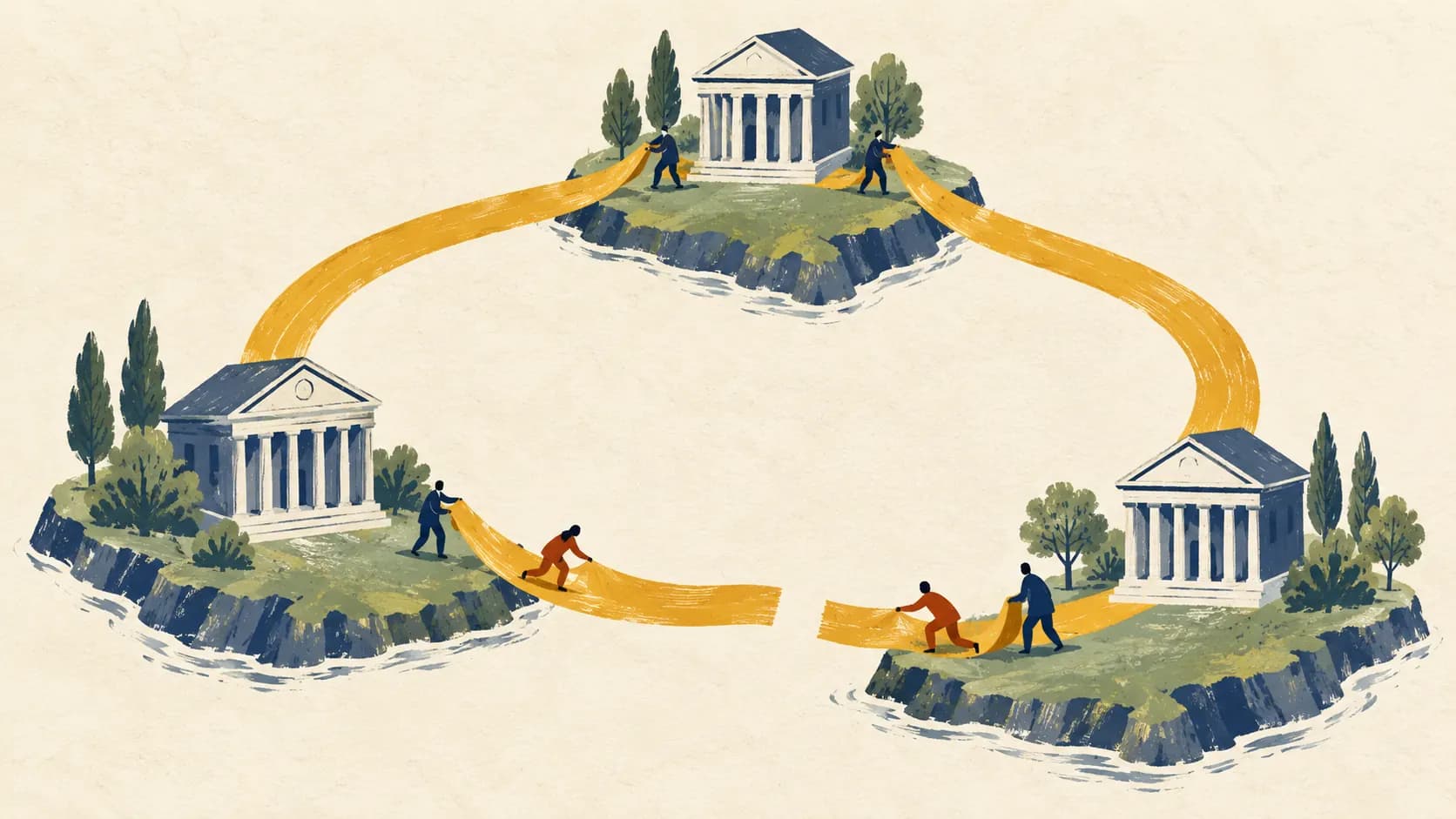
No one did anything wrong. Both officers are good at their jobs. The solution existed inside the office the whole time. The office simply had no path to carry it from one courthouse to the other.
A scene like this can happen in any pretrial services office. Officers spend their days in court, at the jail, and in the community, and many offices work out of several courthouses. It would be easy to assume the fix is better communication tools, such as another group email or a shared drive. But the officer already had a phone and a staff directory. The tools were never the missing piece.
What was missing was a team
Patrick Lencioni, author of The Five Dysfunctions of a Team, argues that what separates a real team from a group of capable individuals is a focus on collective results. On a real team, people care more about the group's shared goals than about their own section or standing. The colleague with the answer was doing what good officers do: taking care of their own caseload and their own courthouse. Nothing in how the office worked made another officer's success their concern too.
Lencioni places trust at the foundation of every strong team. He means a specific kind of trust: people comfortable enough to admit what they don't know and ask for help. It takes exactly that kind of trust to ask the whole office, "Has anyone seen this before?"
Research supports him on this point. Harvard professor Amy Edmondson has spent decades studying psychological safety, a shared belief that the team is safe for interpersonal risk taking. Teams with more of it share information more readily, learn more, and perform better. Her research also points to where that safety comes from. In a study of hospital teams, Edmondson and Ingrid Nembhard found that when leaders actively invited and valued other people's contributions, their teams felt safer speaking up.
Breaking down silos is leadership work
In Silos, Politics and Turf Wars, Lencioni explains that silos form naturally in any organization with separate locations and roles. Each group focuses on its own work and assumes that work is what matters most. It takes leaders to give people a compelling reason to work across those lines.
That is why an office where people take responsibility for each other's success does not form on its own, especially across several courthouses. Leaders build it, and the skills they need can be developed.
What leaders do to build one team
A shared definition of success. Lencioni recommends a rallying cry: one goal that matters most right now, shared by the whole office for a set period of time, with a few specific objectives that make it concrete. An office might spend six months under the rallying cry "Every courthouse, one team," starting with location monitoring: sharing every fix across courthouses so that no one on release loses out because of an equipment problem. No single office can reach a goal like that alone.
One leadership team across every courthouse. Lencioni argues that a leader's first loyalty belongs to their fellow leaders, not only to the group they manage. When supervisors in different courthouses act as one team, their staff follow the same pattern.
Making it safe to say "I'm stuck." A supervisor who admits what they don't know, and thanks people for raising problems, makes asking for help normal.
Recognizing help, not only individual results. When the colleague who shares a solution gets as much credit as the officer who closes a hard case, people learn what the office values.
My own view is that the place to start is with the supervisors. When they begin working as one leadership team, every other practice on this list becomes easier to build.
These skills can be built
Every practice on that list asks something of a leader personally. A leader needs self-awareness and a sense of security to admit "I don't know" in front of staff. A leader needs to manage their own reactions to respond calmly when someone brings them a problem. A leader needs resilience to stay open to colleagues in a demanding job, instead of pulling inward to get through their own work. In my practice, I have come to believe that emotional intelligence and resilience are the foundation every other leadership skill stands on, and that both can be developed with sustained practice.
The broader research agrees. A 2017 meta-analysis in the Journal of Applied Psychology reviewed 335 studies of leadership training and found meaningful gains in what people learned, how they led on the job, and the results their teams produced, including an estimated 28 percent improvement in on-the-job leadership behavior. The researchers also found that how a program is designed and delivered makes a real difference.
Development that builds the team while it builds skills
In a spread-out office, leadership development serves two purposes at once. When people from different courthouses build these skills in the same room, they leave as colleagues who know each other and share a stake in each other's work. The officer who learned alongside someone from another site now has someone to call, and a reason to.
The most effective development brings supervisors together as one leadership team, includes every role, and works on real moments like asking for help on a hard case or sharing a fix with another office. It continues over months, not a single day. Many offices already do parts of this well, and building on that foundation is where the biggest gains are.
Back to Thursday afternoon
Same Thursday. Same warehouse. Same faulty monitor. A different kind of office.
The alerts start. The officer remembers her supervisor mentioning last month that another courthouse had worked out a GPS problem with the vendor. She posts in the officers' group chat asking who handled it. Within the hour, the colleague two hours away replies with the fix and offers to walk her through it by phone.
The alerts stop that evening. The man keeps his job. The officer spends Friday on the rest of her caseload.
None of that was luck. It started with the office's leaders. Six months earlier, the chief and supervisors had named "Every courthouse, one team" as the office's rallying cry, starting with location monitoring. The supervisors from each courthouse began meeting regularly as one leadership team to compare notes and help each other. When the colleague solved the GPS problem, their supervisor brought the fix to that meeting, and every supervisor passed it on to their own staff. Along the way, supervisors made it normal to ask for help, and they made a point of thanking people who shared what they learned.
The officers had the same tools in both versions of this story. What changed was how the office was led.
Leaders who act as one team, and who make asking and sharing part of the job, build offices where the next call happens on the first day. That is what leadership development is for.
Steve Weiss is the founder of Catalis Leadership, an executive coaching and leadership development practice. He is an ICF Associate Certified Coach and a Certified Hogan Consultant, and he welcomes conversations with public service leaders about building stronger teams.