Light the Way, and Your Team Follows: How Leadership Style Drives Team Behavior
The culture you have is the one you are creating.
Leaders who show people what good looks like get constructive behavior. Leaders who mostly point out what is wrong get defensive behavior. This page shows how that works, how it cascades through an organization, and how it changes.
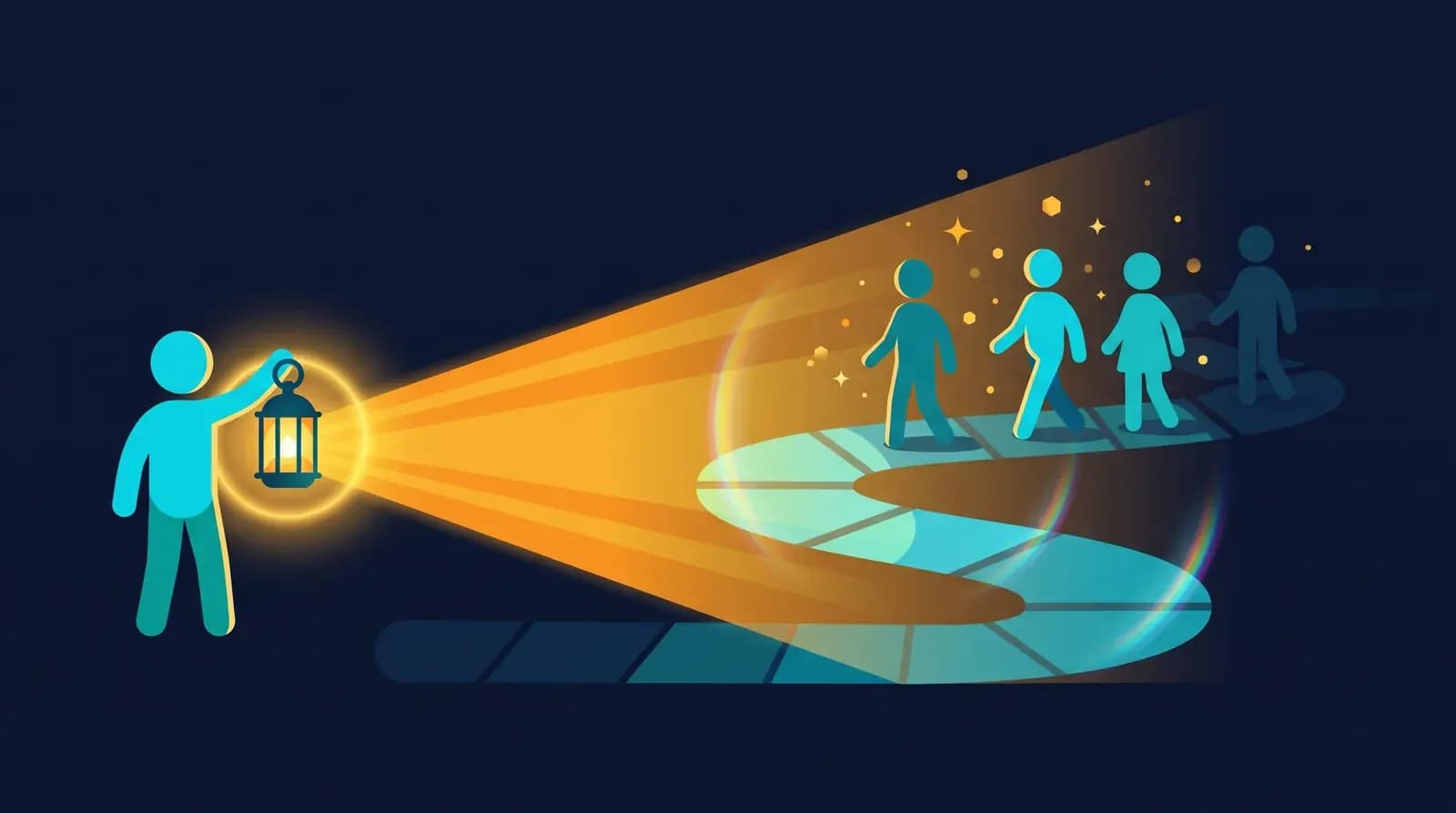
Why does a team behave the way its leader does?
A leader's behavior drives how the team behaves. Leaders who show people what good looks like get constructive behavior. Leaders who mostly point out what is wrong get defensive behavior, even from good people. Steve Weiss of Catalis Leadership helps leaders see which one they are doing and change it.
Published · Updated
Steve Weiss of Catalis Leadership has completed the Accreditation Program for Leadership/Impact® (opens in a new tab) and Management/Impact® (opens in a new tab) by Human Synergistics.

Two paths from the same leader
Every leader wants the same thing from the people around them: own the work, try things, help each other, pull together.
Whether you get it depends on how you lead, day to day. Human Synergistics (opens in a new tab), which has studied this for decades, puts it simply. Strategies that tell people what is wanted (prescriptive) produce constructive behavior. Strategies that tell people what is not wanted (restrictive) produce defensive behavior.
Nobody chooses the second path on purpose. Pressure, time, and habit choose it. And once people turn defensive, the natural response is more restriction, which makes it worse.
The path you intend
- What you want to encourage
- Prescriptive strategies
- Constructive behavior
- Strong results
The path that takes over
- Pressure, time, and habit
- Restrictive strategies
- Defensive behavior
- Weaker results
the trap: defensive behavior invites more restriction
From the Leadership/Impact® model of Human Synergistics, in our own words.
What the two paths look like on a team
The people around a leader can describe what his strategies actually lead them to do, and the answer falls into one of three patterns.
Constructive
- Takes initiative
- Raises problems early
- Helps each other
- Takes pride in the work
Passive defensive
- Waits to be told
- Avoids decisions
- Agrees in the meeting, disagrees after
Aggressive defensive
- Competes with colleagues
- Controls instead of delegating
- Wins arguments instead of solving problems
Constructive teams put their energy into the work. Defensive teams put it into self-protection, either by playing it safe (go along, follow the rules, wait for permission) or by pushing (criticize, control, compete). Most teams are a mix. The question is which one you are feeding.
Small things, big effects
The link between what a leader does and what people do is specific, not vague. A few examples from the research:
| When a leader mostly ... | ... people around them tend to |
|---|---|
| Notices what is done well | Pursue goals, grow, and help each other |
| Rewards effort and celebrates wins | Set and chase goals |
| Decides with people | Act as a team |
| Watches for mistakes and exceptions | Resist, criticize, and grab control |
| Punishes mistakes | Compete and chase every detail |
| Decides alone and vetoes | Conform and wait to be told |
Notices what is done well
... people around them tend to
Rewards effort and celebrates wins
... people around them tend to
Decides with people
... people around them tend to
Watches for mistakes and exceptions
... people around them tend to
Punishes mistakes
... people around them tend to
Decides alone and vetoes
... people around them tend to
Every leader does some of both. The effective ones do the first kind often and the second kind rarely. Adapted from the Human Synergistics Leadership/Impact® model.
And it cascades
How you lead your managers is how they lead their teams. Culture flows downhill, which is why an organization's results can be traced back to the strategies at the top.
- Senior leaders' strategies
- Managers' behavior, which is also how they lead their teams
- Front-line behavior
- Culture, satisfaction, and results
Do you know which path you are on?
Most leaders don't, because the people around you are careful about what they say to the person who evaluates them.
Human Synergistics is a research firm that has measured how leaders, groups, and organizations actually behave for more than fifty years. Its Leadership/Impact® assessment looks at two things side by side: the impact you intend to have on the people around you, and the impact they say you are actually having. The majority of leaders who take it are surprised to learn that they are having the opposite impact of the one they envision.
How are you driving your team's behavior? Do you know? With awareness comes the path to growth, and that growth transforms you, your team, and your organization.
Can you change it?
Yes. You can change your own behavior, and through it the culture of your team and your organization.
Leadership/Impact® shows where your strategies stand today and the behavior they are producing. Combined with coaching, and measured again as the work goes on, the whole culture can shift over time, toward greater satisfaction, efficiency, and value.
This page, on one page
The two paths, the examples, and the cascade as a one-page visual handout to keep.
Questions
Is my team's behavior really my doing?
Mostly, yes. Hiring and history play a part, but your strategies are the strongest signal people read.
So I should never correct anyone?
No. Correct when you need to, and pair it with what good looks like. The balance is what decides the culture.
Is this about personality?
No. It is about what you do as a leader, and what you do can change.
How long does it take?
It varies with the leader and the team. Lasting change in a culture takes sustained work, which is why the assessment is repeated to measure it.
The research behind this page
The ideas on this page come from Human Synergistics' published research. These are good places to read more.
- Leadership/Impact Leadership Assessment (opens in a new tab)
Human Synergistics
What the assessment measures and how it works.
www.humansynergistics.com
- Product Overview: Leadership/Impact® (opens in a new tab)
How the report presents a leader's strategies, impact, and effectiveness.
www.humansynergistics.com
- Developing Constructive Leader Impact (opens in a new tab)
Robert A. Cooke, Ph.D., and Linda Sharkey, Ph.D., Consulting Today
How prescriptive and restrictive leaders shape the behavior around them.
www.humansynergistics.com
- An International Study of the Reliability and Validity of Leadership/Impact (L/I) (opens in a new tab)
Janet L. Szumal, Ph.D. (2002)
Research showing the assessment measures what it sets out to measure, across countries.
www.humansynergistics.com
Leadership/Impact® and Management/Impact® are registered trademarks of Human Synergistics International.
Related pages
- Leadership/Impact® and Management/Impact®
The 360 that measures how your leadership style drives team behavior.
- Leadership Impact Coaching
A coaching program built around two Leadership/Impact® assessments, so you see the change.
- Change Management
Leading change that lasts, from burning platform to burning ambition.
- Burning Platform to Burning Ambition
Why fear starts a change and wanting something keeps it going.
- Team Coaching
Coaching for leadership teams that need to work as one.
- Executive Coaching
One-to-one coaching for the leader behind the culture.
- Leadership Glossary
Short definitions of the terms used on this page.

Steve Weiss
Executive Coach and Leadership Consultant
A conversation about what your team's behavior is telling you
Cleveland· Coaching available nationwide and worldwide
If you would like to talk through what your team's behavior is telling you about your leadership, that is a conversation I enjoy having. The assessment is there if it helps, and not required.
Free 30-min call · No obligation · Response within 24 hours